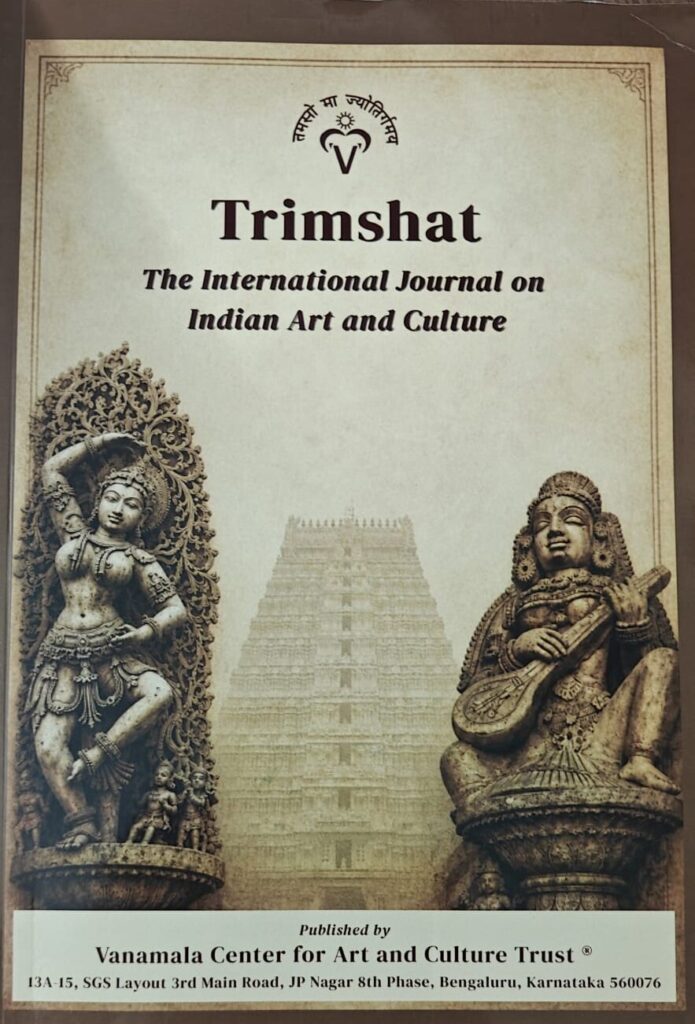
TRIMSHAT - THE INTERNATIONAL JOURNAL ON INDIAN ART AND CULTURE
Published by Vanamala Center for art and culture edited by Dr Meera Rajaram Pranesh
About the Journal
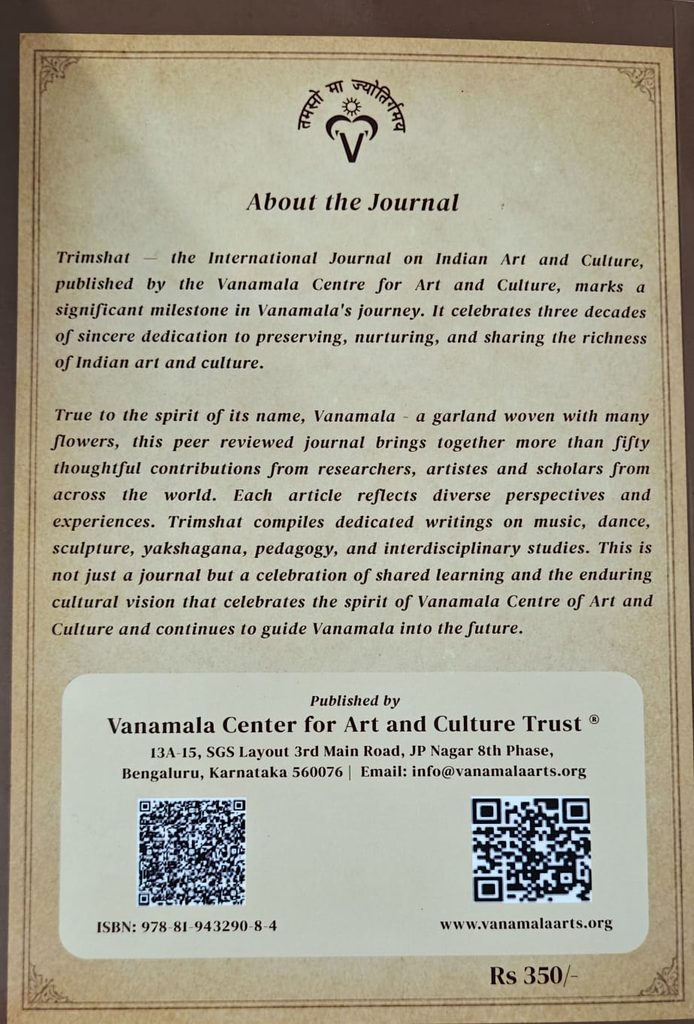
Trimśat – The International Journal on Indian Art and Culture, published by the Vanamala Centre for Art and Culture, marks a significant milestone in Vanamala’s journey of three decades of sincere dedication to preserving, nurturing, researching, and sharing the richness of Indian art and culture. Trimśat brings together more than fifty thoughtful dedicated writings on music, dance, sculpture, Yakshagana, pedagogy, and interdisciplinary studies, creating a rich tapestry of scholarship and artistic inquiry. The journal provides a space where varied voices and disciplines come together, much like the many flowers that form a Vanamala. The journal is intended for a wide and diverse readership-researchers, scholars, teachers, students, practising artistes, cultural practitioners, and anyone with a keen interest in India’s artistic and cultural heritage. By bringing scholarly research alongside artistic perspectives and interdisciplinary inquiry, Trimśat seeks to make meaningful knowledge accessible to both academic and wider cultural communities.

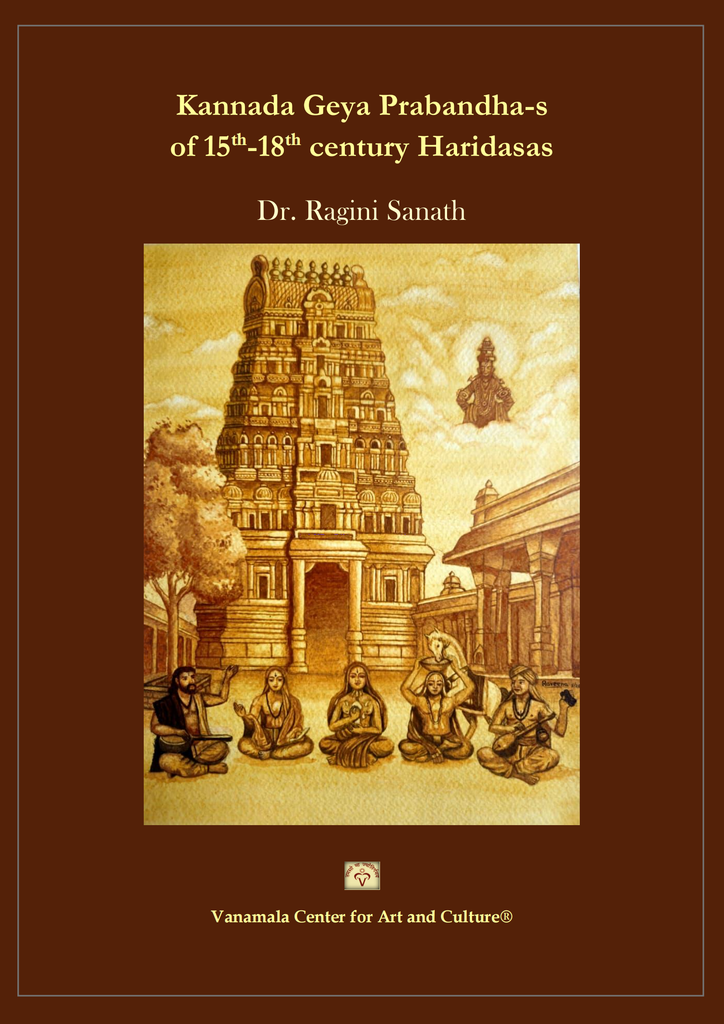
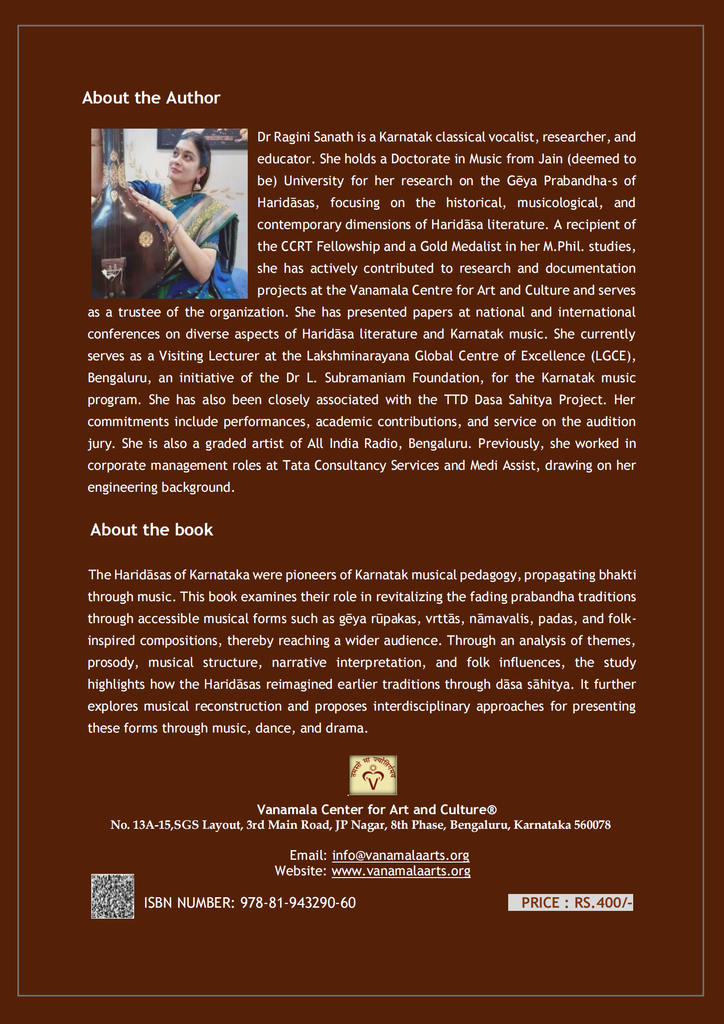
Kannada Geya Prabandha-s of 15th-18th century Haridasas - Dr Ragini Sanath
About the book
The Haridāsas of Karnataka were pioneers of Karnataka music pedagogy, propagating bhakti through music. This book examines their role in revitalizing the fading prabandha traditions through accessible musical forms such as gēya rūpakas, vṛttās, nāmāvalis, padās, and folk-inspired compositions, thereby reaching a wider audience.
Through an analysis of themes, prosody, musical structure, narrative interpretation, and folk influences, the study highlights how the Haridāsas reimagined earlier musical traditions through Dāsa Sāhitya.
The book further explores the reconstruction of these musical forms and proposes interdisciplinary approaches for presenting them through music, dance, and drama, offering new perspectives on preserving and bringing these historical traditions to contemporary audiences.
The chapters in the book have been designed as independent units of study, allowing readers to select and explore individual chapters according to their interests. This approach makes the book accessible to readers and learners of different age groups who are interested in Haridāsa Sāhitya and its musical traditions, whether from literary, musical, historical, or cultural perspectives.
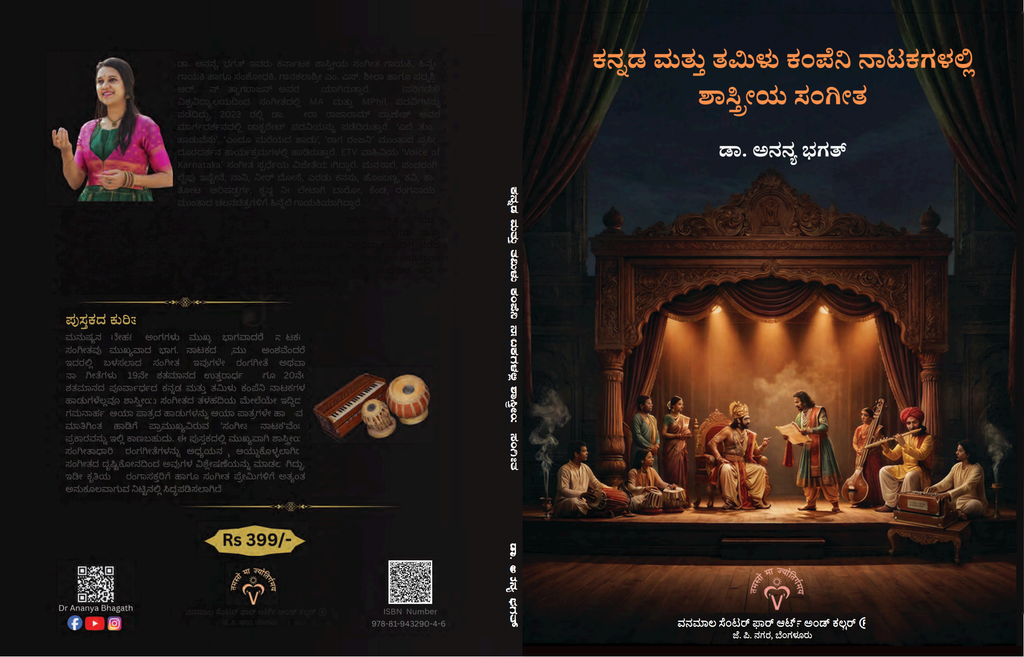
Kannada mattu Tamilu Company natakagallalli shastreeya sangeeta- Dr Ananya Bhagath
ಪುಸ್ತಕದ ಕುರಿತು
19ನೇ ಶತಮಾನದ ಉತ್ತರಾರ್ಧದಿಂದ 20ನೇ ಶತಮಾನದ ಪೂರ್ವಾರ್ಧದವರೆಗೆ ಕನ್ನಡ ಮತ್ತು ತಮಿಳು ಕಂಪನಿ ನಾಟಕಗಳ ಬೆಳವಣಿಗೆಯಲ್ಲಿ ಸಂಗೀತವು ಪ್ರಮುಖ ಪಾತ್ರವನ್ನು ವಹಿಸಿತು. ನಾಟಕಗಳಲ್ಲಿ ಸಂಗೀತವು ಕೇವಲ ಮನರಂಜನೆಯ ಅಂಶವಾಗಿರದೆ, ಕಥೆಯ ನಿರೂಪಣೆ, ಪಾತ್ರಗಳ ಅಭಿವ್ಯಕ್ತಿ ಹಾಗೂ ನಾಟಕೀಯತೆಯನ್ನು ಪರಿಣಾಮಕಾರಿಯಾಗಿ ಕಟ್ಟಿಕೊಡುವ ಪ್ರಮುಖ ಮಾಧ್ಯಮವಾಗಿತ್ತು.
ಈ ಪುಸ್ತಕವು ಕನ್ನಡ ಮತ್ತು ತಮಿಳು ಕಂಪನಿ ನಾಟಕಗಳಲ್ಲಿ ಶಾಸ್ತ್ರೀಯ ಸಂಗೀತದ ಪ್ರಭಾವ, ಅದರ ಬಳಕೆ ಮತ್ತು ಬೆಳವಣಿಗೆಯನ್ನು ಅಧ್ಯಯನ ಮಾಡುತ್ತದೆ. ಆ ಕಾಲಘಟ್ಟದ ನಾಟಕಗಳಲ್ಲಿ ಹಾಡುಗಳು ಮತ್ತು ಸಂಗೀತವು ಹೇಗೆ ನಾಟಕದ ಅವಿಭಾಜ್ಯ ಅಂಗವಾಗಿದ್ದವು ಎಂಬುದನ್ನು ಪುಸ್ತಕವು ಪರಿಶೀಲಿಸುತ್ತದೆ.
ವಿಶೇಷವಾಗಿ, 19ನೇ ಶತಮಾನದ ಉತ್ತರಾರ್ಧ ಮತ್ತು 20ನೇ ಶತಮಾನದ ಪೂರ್ವಾರ್ಧದ ಕನ್ನಡ ಹಾಗೂ ತಮಿಳು ಕಂಪನಿ ನಾಟಕಗಳಲ್ಲಿ ಶಾಸ್ತ್ರೀಯ ಸಂಗೀತದ ತಳಹದಿಯ ಮೇಲೆ ರೂಪುಗೊಂಡ ನಾಟಕೀಯ ಸಂಗೀತ ಪರಂಪರೆಯನ್ನು ಈ ಕೃತಿ ದಾಖಲಿಸುತ್ತದೆ. ವಿವಿಧ ಪಾತ್ರಗಳಿಗೆ ಸಂಬಂಧಿಸಿದ ಹಾಡುಗಳನ್ನು ಆಯಾ ಪಾತ್ರಗಳೇ ಹಾಡುವ ಪರಂಪರೆ, ನಾಟಕೀಯ ಸಂದರ್ಭಗಳಿಗೆ ಅನುಗುಣವಾಗಿ ಸಂಗೀತದ ಬಳಕೆ ಹಾಗೂ ಕಂಪನಿ ನಾಟಕಗಳ ಸಂಗೀತ ಪರಂಪರೆಯ ವೈಶಿಷ್ಟ್ಯಗಳನ್ನು ಇಲ್ಲಿ ಗುರುತಿಸಲಾಗಿದೆ.
ಈ ಕೃತಿಯು ಕನ್ನಡ ಮತ್ತು ತಮಿಳು ರಂಗಭೂಮಿಯ ಇತಿಹಾಸದಲ್ಲಿ ಶಾಸ್ತ್ರೀಯ ಸಂಗೀತ ಮತ್ತು ನಾಟಕಗಳ ನಡುವಿನ ಸಂಬಂಧವನ್ನು ದಾಖಲಿಸುವ ಒಂದು ಮಹತ್ವದ ಅಧ್ಯಯನವಾಗಿ ಕಾಣಿಸುತ್ತದೆ.
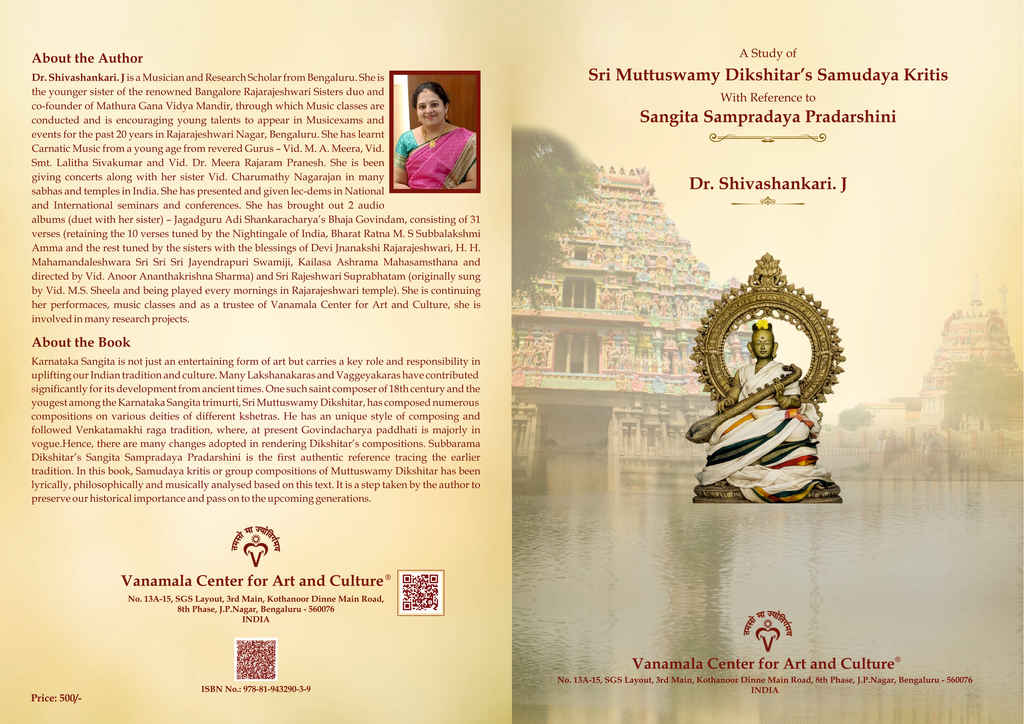
A study of Sri Muttuswamy Dikshitar's Samudaya Kritis With Reference to Sangita Sampradaya Pradarshini by- Dr Shivashankari J
About the Book
Karnataka Sangeeta is not merely an entertaining form of art but carries a significant role and responsibility in upholding Indian tradition and culture. The Lakshana-karas and Vaggeyakara-s have contributed significantly to its development from ancient times.
Sri Muttuswamy Dikshitar, one of the great composers of the Karnataka Sangeeta Trinity and an 18th-century composer, created numerous compositions on various deities associated with different kshetras. He followed a distinctive style of composition rooted in the Venkatamakhi raga tradition, in which the Govindacharya paddhati is predominantly followed in present-day usage.
Sangita Sampradaya Pradarshini, authored by Subbarama Dikshitar, serves as an authentic reference tracing this earlier musical tradition. In this book, the Samudaya Kritis, or group compositions, of Muttuswamy Dikshitar are analysed lyrically, philosophically, and musically, with Sangita Sampradaya Pradarshini as the primary reference.
The study is presented as an effort to preserve the historical importance of these compositions and pass this knowledge on to future generations.
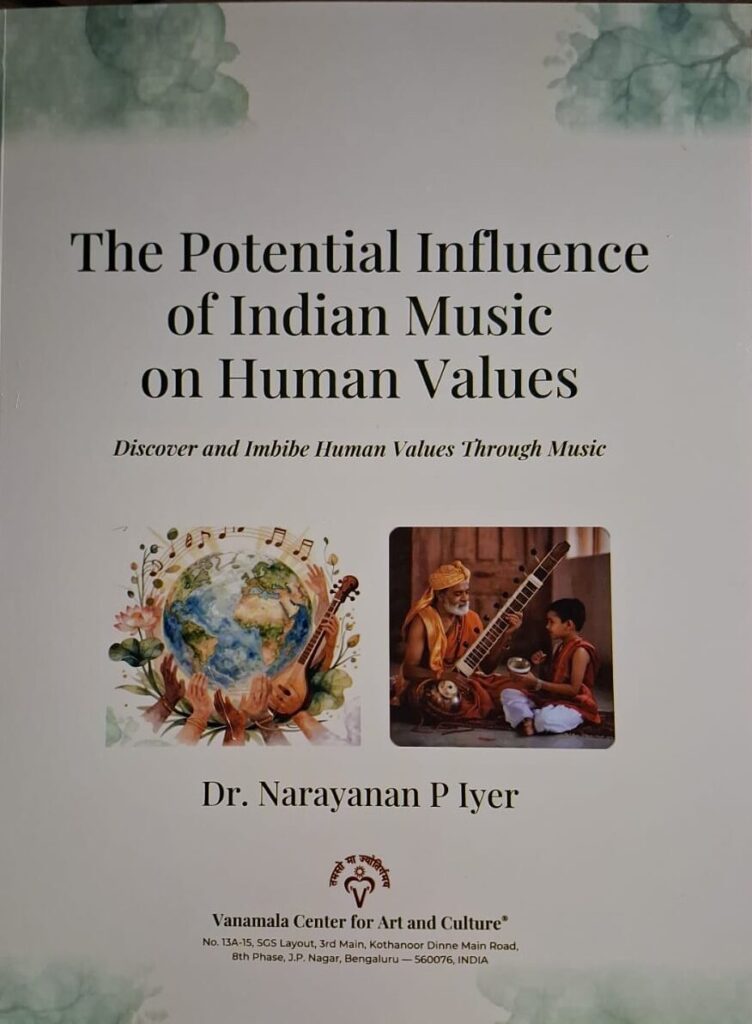
Potential Influence of Indian Music on Human values - Dr Narayanan P Iyer
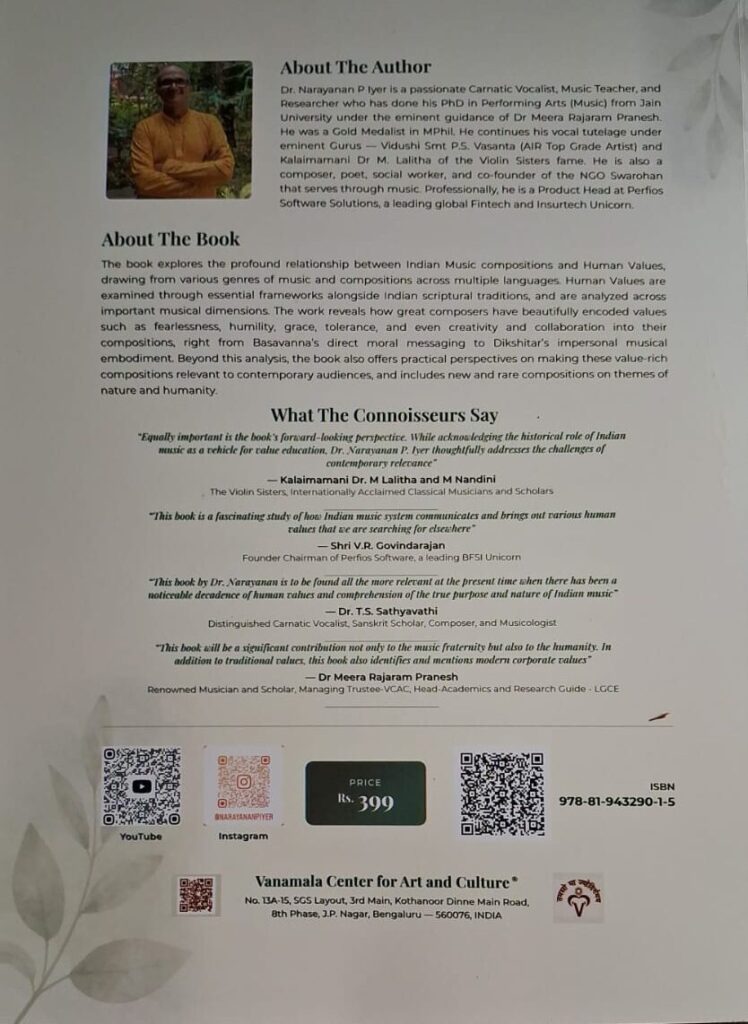
About the Book
The book explores the profound relationship between Indian music compositions and human values, drawing from various genres of music and compositions across multiple languages. Human values are examined through essential frameworks alongside Indian scriptural traditions, and are analyzed across important musical dimensions. The work reveals how great composers have beautifully encoded values such as fearlessness, humility, grace, tolerance, and even creativity and collaboration into their compositions, right from Basavanna’s direct moral messaging to Dikshitar’s impersonal musical embodiment.
Beyond this analysis, the book also offers practical perspectives on making these value-rich compositions relevant to contemporary audiences and includes new and rare compositions on the themes of nature and humanity.
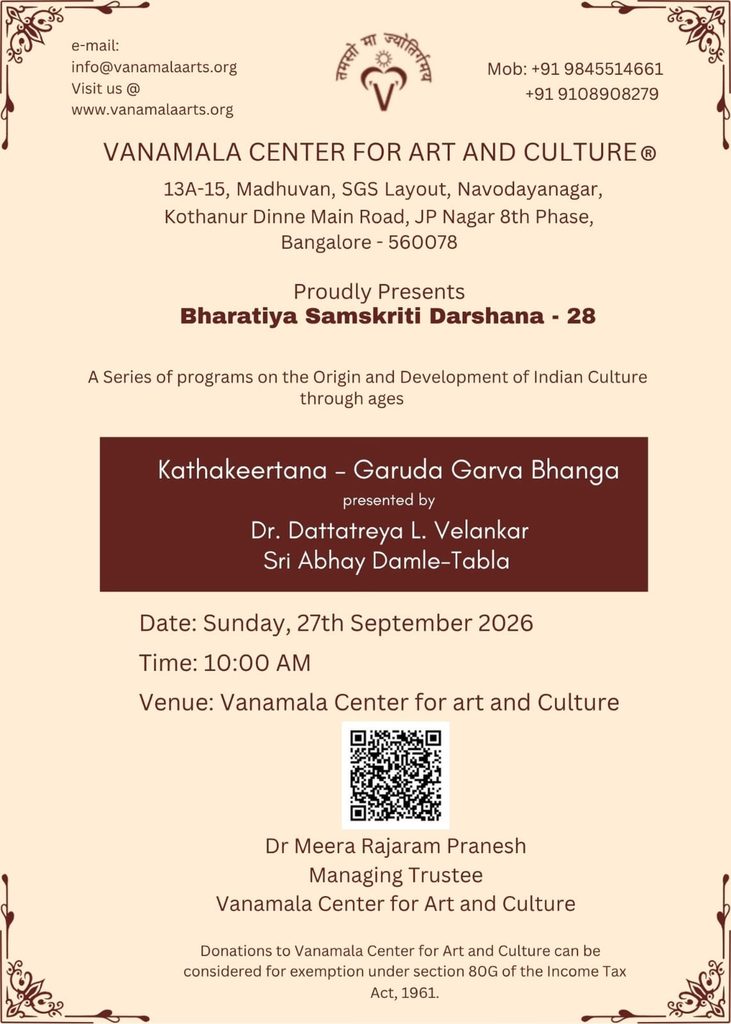
BHARATIYA SAMSKRITI DARSHANA- 28- KATHAKEERTANA - GARUDA GARVA BHANGA
Kathakeertana- Garuda Garva Bhanga presented by Dr.Dattatreya L.Velankar on Sunday, 27th September 2026 at 10:00 am
Vanamala Center for Art and Culture warmly invites one and all to be part of a beautiful morning of Kathakeertana, presented by Dr. Dattatreya Velankar and team.
Come experience the timeless tradition of storytelling, music and devotion in an enriching cultural presentation.
We look forward to welcoming you!
Garuda Garva Bhanga – A Morning of Harikathe at Vanamala
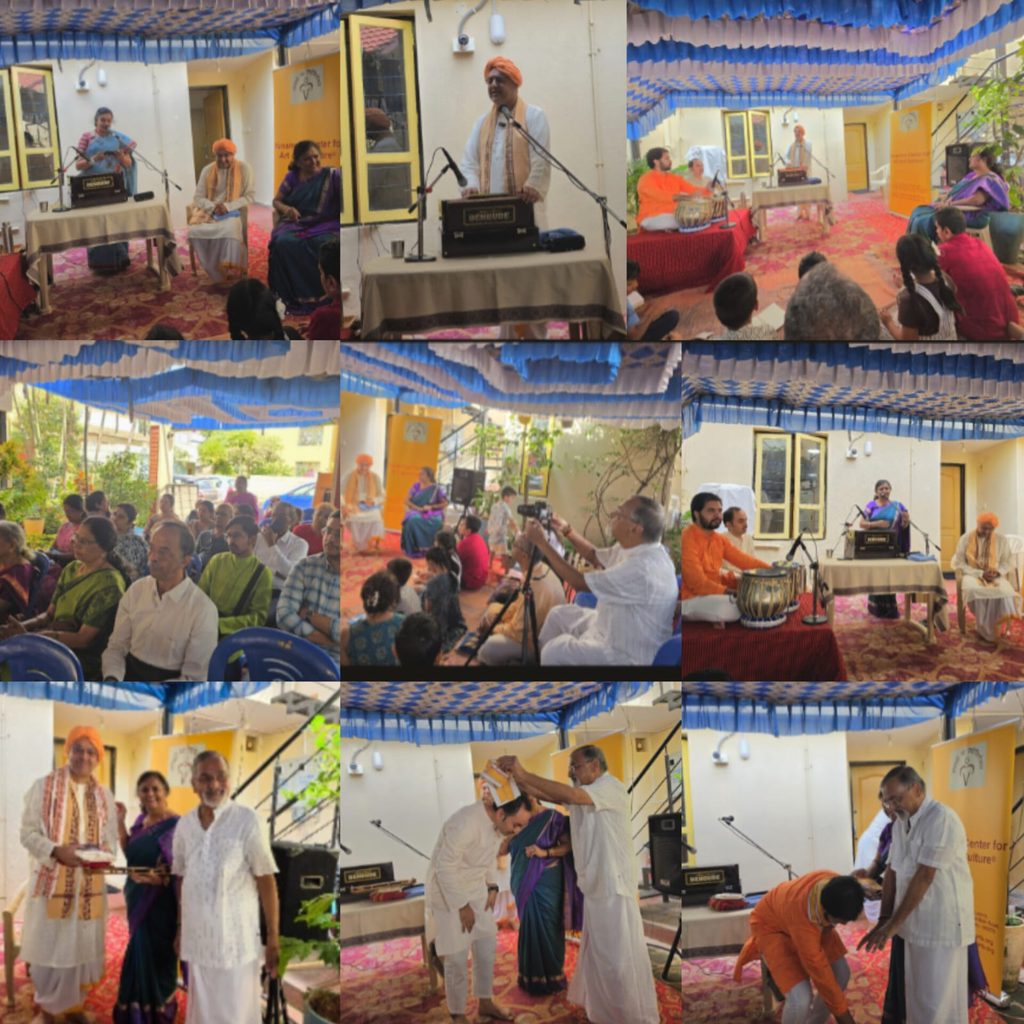
On Sunday, 27 September 2026, the Vanamala Centre for Art and Culture was filled with an enthusiastic audience gathered in anticipation of a morning of music, storytelling and tradition.
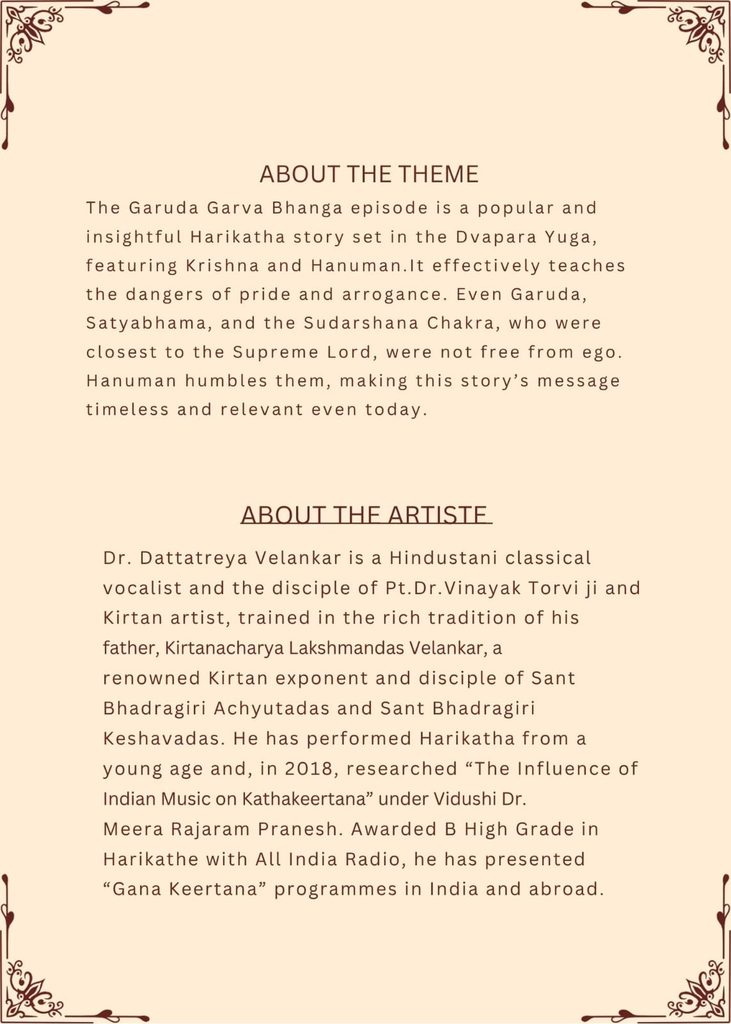
The morning featured Dr. Dattatreya L. Velankar and team, presenting the popular Harikathe Garuda Garva Bhanga, a fascinating episode from the Dvapara Yuga featuring Lord Krishna, Garuda and Hanumanta.
The programme began with a warm welcome and a brief introduction to the artistes and the theme by Dr. Ragini Sanath. Dr. Dattatreya Velankar then enthralled the audience with his engaging presentation, seamlessly interspersing the narrative with soulful bhajans and relevant songs that brought the story vividly to life. Dr Dattatreya Velankar is known for his powerful yet melodious voice.
The central theme of Garuda Garva Bhanga is the humbling of pride through divine wisdom. The story depicts how Garuda’s pride in his strength and status is humbled through his encounter with Hanumanta, with Lord Krishna at the heart of the episode. Apart from Garuda, pride of Balarama, Sudarshana and Satyabhama are humbled by HanumanthaThrough this engaging narrative, the story brings out the timeless values of devotion, humility and surrender, reminding us that true strength lies beyond power and personal pride.
Dr. Velankar was accompanied on tabla by Sri Abhay Damle and on tāla by Sri Sujith, whose sensitive accompaniment enriched the musical and storytelling experience.
The programme offered a wonderful glimpse into the niche and beautiful art form of Harikathe, where storytelling unfolds through a seamless blend of narration, music, bhajans and song. It was an experience that allowed the audience to not merely hear the story, but to experience its characters, emotions and values through music.
Following the presentation, Dr. Meera Rajaram Pranesh spoke warmly about Dr. Velankar’s journey and his sustained engagement with this beautiful art form. The morning concluded with the Pranesh couple felicitating the artistes, honouring their contribution to keeping this rich tradition alive.
Perhaps the most heartwarming aspect of the morning was the audience itself , ranging in age from six to eighty years. To see such a diverse gathering sit together, listen with interest and immerse themselves in the world of Harikathe was a beautiful reminder of the timeless appeal of this art form. What made it even more special was watching the young children actively engage with the presentation. They listened attentively, made notes about the story and, at the end of the programme, came forward to share what they had learnt with Dr.Velankar. Their enthusiasm, curiosity and eagerness to understand and recount the story beautifully reflected how traditional art forms can connect with young minds when presented in an engaging manner. Seeing the children listen, learn and confidently share their understanding was truly heartwarming and a wonderful affirmation that the legacy of Harikathe can continue to live on through the next generation.
It was truly a morning where story, music, devotion and tradition came together, reaffirming the importance of preserving and celebrating India’s rich storytelling heritage for generations to come.
Heartfelt thanks to Dr. Dattatreya Velankar, Sri Abhay Damle and Sri Sujith for sharing their art with us. Our sincere gratitude to every member of the audience who joined us and made the morning so special. Your presence, enthusiasm and appreciation are what keep these beautiful traditions alive.
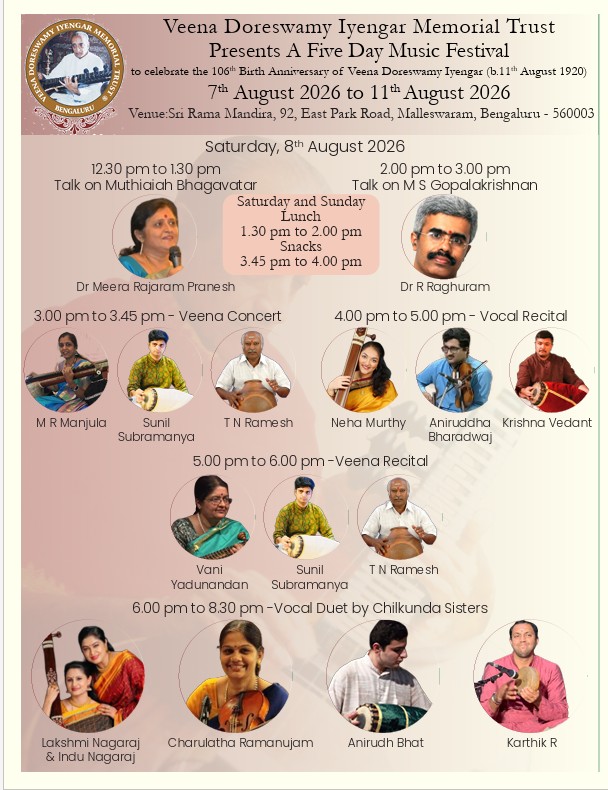
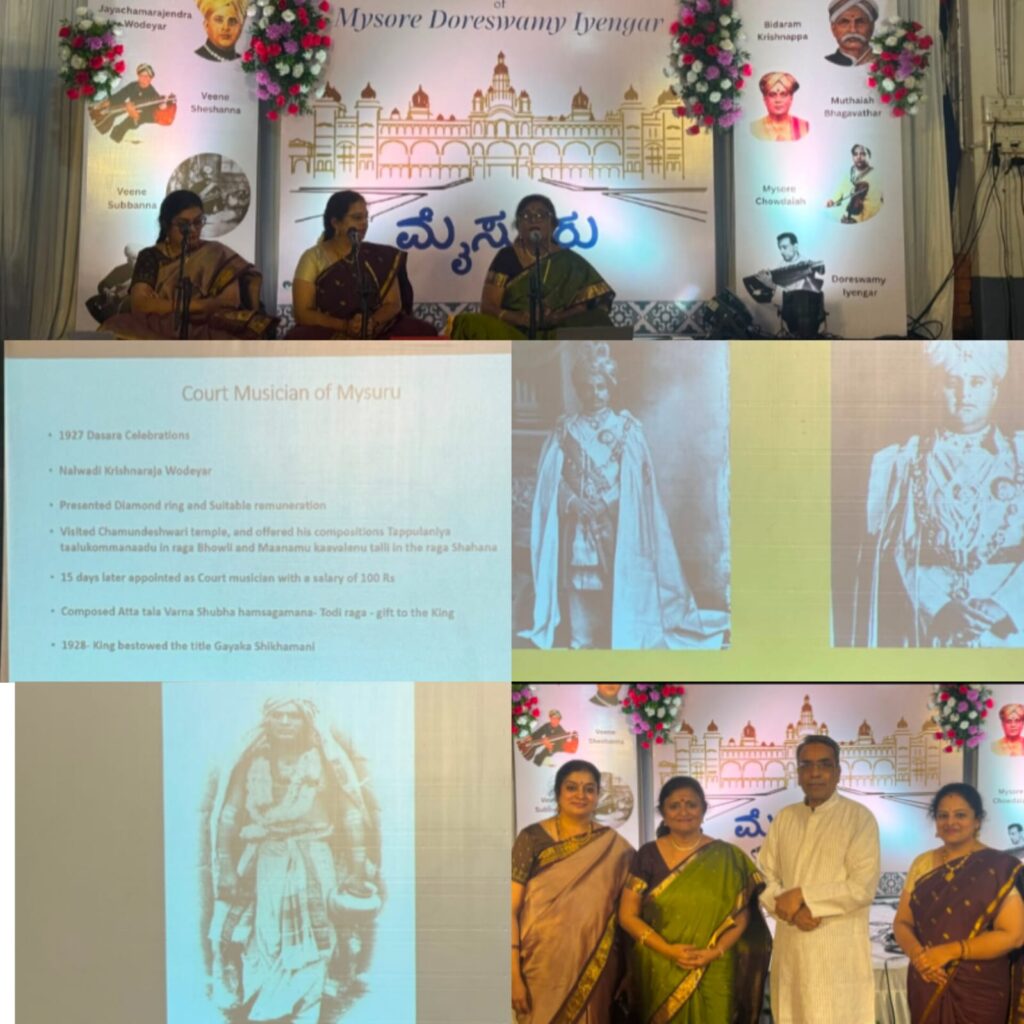
Talk on Dr Harikesha Nelluru Muttaiah Bhagavathar- Lecture Demonstration
At Veena Doreswamy Iyengar Memorial Trust on 8/8/2026 at 1230 noon at Venue: Sri Rama Mandira, 92, East Park Road, Malleswaram
Trimshat-Celebrating 30 years of Excellence in Music and Research

Trimshat-
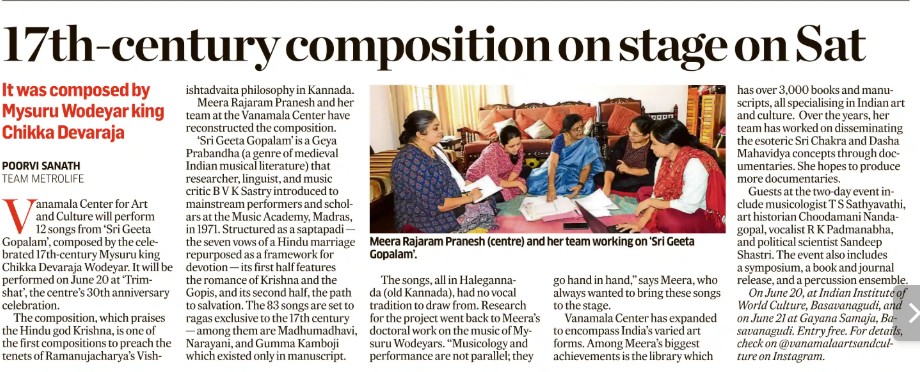
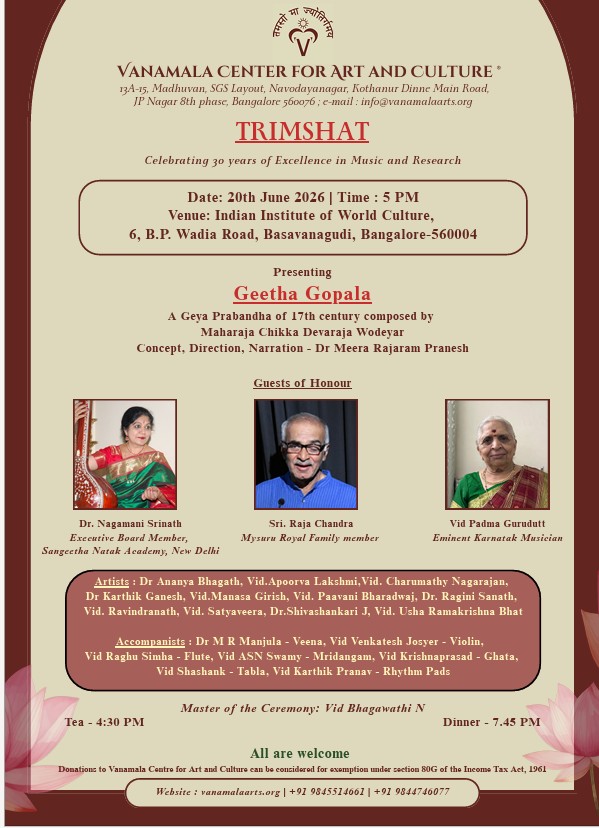
Vanamala Center for Art and Culture is proud to celebrate thirty years of dedicated service to the preservation, promotion, and dissemination of India’s artistic, cultural, and literary heritage. To commemorate this significant milestone, the Centre has organized a two-day event featuring scholarly, cultural, and artistic programs that reflect its enduring commitment to the arts and culture.The center is bringing out a scholarly International Journal of Art and Culture-Trimshat, under the editorial of Dr.Meera Rajaram Pranesh . True to the spirit of its name, Vanamala - a garland woven with many flowers, this journal brings together more than fifty thoughtful contributions from researchers, artistes, scholars, and connoisseurs from across the world. Each article reflects diverse perspectives and experiences. Triṁśat compiles dedicated writings on music, dance, sculpture, yakshagana, pedagogy, and interdisciplinary studies.
Day 1 : 20th June 2026 : Venue : Indian Institute of World culture:9:30am-1:00pm - Sangeeta Kalaratna Sri BVK Sastri memorial symposium and book release , 5pm onwards : Geetha Gopala- musical opera
Day 2: 21st June 2026: Venue: Gayana samaja : 9:30am-11:15am- Inauguration and Laya Lavanya; 11:15a- Celebration of 30years of Vanamala through live performances followed by the release of the international journal-Trimshat.
All are welcome!!




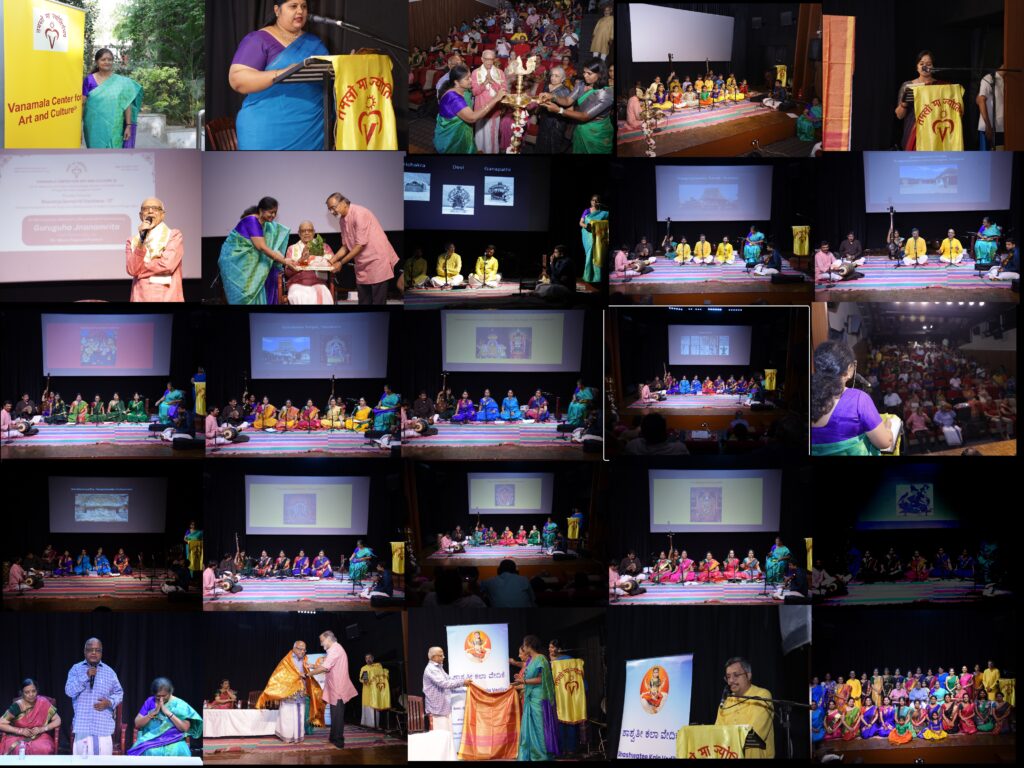
Guruguha Jnanamrita- Celebration of the 250th Birth Anniversary of Sri Muttuswamy Dikshitar
Vanamala Centre for Art and Culture, as part of Bharatiya Samskruti Darshana series, celebrated the twenty seventh series as the 250th birth centenary of the revered composer Sri Muttuswamy Dikshitar on 22nd March 2026, Sunday at Suchitra Cinema and Cultural Academy, Bengaluru. The event, Guruguha Jnanamrita, curated by Dr. Meera Rajaram Pranesh, became even more meaningful as it coincided with Dikshitar’s janma tithi.


The event was presided by eminent musicians Karnataka Kalashree Vidwan M.Vasudeva Rao and Sangeeta Kalaratna Dr.M, Suryaprasad M as chief guests, whose warmth and encouragement enriched the gathering. The programme opened on a serene and uplifting note with a soulful shloka rendered by the master of the ceremony, Vid. Nagashree Narayan, beautifully invoking the spirit of the great composer. This was followed by a poised introduction of the guests by Vid. Pavani Bharadwaj and the traditional lighting of the lamp by the founders and the guests. The morning began with a vibrant presentation of the nottuswaras composed by Deekshitar-“Shakti Sahita Ganapathim” and “Ramajanardhana” by the young children of Vanamala’s Chinnari group.
Dr. Meera Rajaram Pranesh then addressed the gathering with a lucid and engaging introduction with pictures celebrating the legacy of the genius composer Sri Muttuswamy Dikshitar. She eloquently shared that the intention of the programme was not merely to present familiar compositions, but to celebrate Dikshitar’s vast and nuanced musical legacy through diverse forms, including rare ragas drawn from the Sangita Sampradaya Pradarshini thereby guiding the audience into the rich world of Dikshitar’s music.
The concert segment unfolded featuring a rich array of compositions presented by different teams of musicians from the Vanamala Center, ably supported by senior artists Vid. B K Raghu on Violin, Ganakalashree Vid.Renuka Prasad on the mridangam and Ganakalashree Vid. ASN Swamy on Khanjira. It began with the stately chowkakala varna “Rupamu Joochi” in Todi, setting a dignified tone for the event. This was followed by the radiant “Sooryamurte” in Saurashtra (Mishra Eka), a fitting tribute to Lord Surya, the presiding deity of the day. The serene “Neelotpalamba” in Narayanagowla and the meditative “Kamalambam Bhajare” in Anandabhairavi brought a deep sense of devotion, while “Sri Parvathi” in Bhowli and “Jambupathe” in Yamunakalyani continued the spiritual flow. A graceful ragamalika, “Madhavo Mam Pahi,” describing the Dashavatara of Lord Vishnu added colour and variety, and the rare “Sri Dakshinamurthy” in Phenadyuti stood out for its quiet depth. The lively daru “Nee Sati” in Sriranjani and the intense “Kalabhairavam” in Bhairavam brought in striking contrasts in mood and energy. The Manipravala composition “Sree Venkatesham” in Karnataka Kapi and the elegant “Narmada Kaveri” in Namadeshi further reflected Dikshitar’s versatility. “Gunijanadi” in the rare raga Gujjari, was presented with its distinctive graha swara feature, an exclusive contribution of Dikshitar to preserving traditions. The concert concluded with the majestic “Meenakshi Memudam” in Gamakakriya, a deeply moving piece associated with the composer’s final moments, leaving listeners in a quiet, reflective mood. Throughout the programme, Dr. Meera’s brief and insightful explanations along with the befitting pictures before each piece helped the audience connect more deeply with the music, making the experience both engaging and meaningful.
The chief guests, in their remarks, appreciated the sincere efforts of Vanamala Centre for Art and Culture in its efforts to preserve these beautiful compositions with care and authenticity. Adding to the significance of the day was the unveiling of Shashwatee Kala Vedike, an organisation that promises to nurture and sustain artistic traditions, an inspiring initiative by Smt. Geetha Kumaraswamy, whose deep passion for classical music has encouraged her to embark on this journey. The event concluded on a note of gratitude with a warm vote of thanks by Dr. Karthik Ganesh, followed by Prasada. While the audience expressed their deep appreciation and happiness, for the Vanamala family, this celebration was more than an event, it was a heartfelt nada namana, a sincere musical offering to Sri Muttuswamy Dikshitar, one that will remain cherished and etched in memory for years to come.